



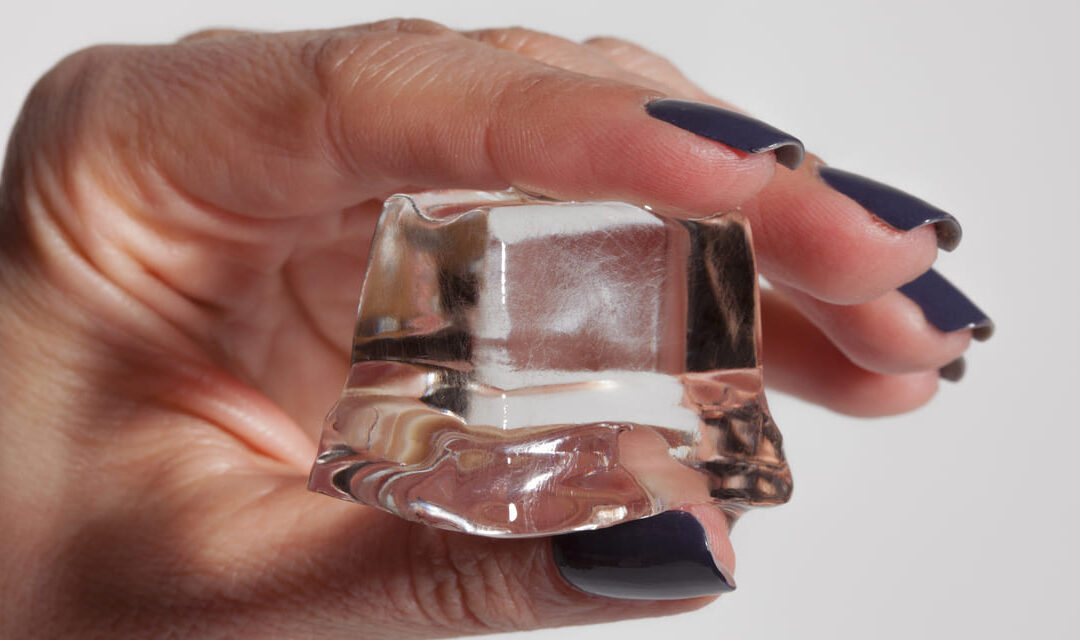
The relationship between water purity and ice quality is direct and decisive. Ice is not just frozen water: it is also the result of a process in which any impurities present in the water affect its clarity, taste, hardness and performance in its end use.
In professional settings (hospitality, mixology, food service or healthcare), the quality of the ice has a direct impact on the customer experience and the operational performance of the machinery.
Here at ITV, we explain the importance of water purity in the quality of ice cubes.
What does it mean for water to be ‘pure’ in ice production?
Water purity does not necessarily mean that the water is drinkable, but rather that it is free from elements that affect the freezing process and the final result.
We are mainly referring to:
- Excess minerals (calcium, magnesium).
- Suspended particles.
- Chlorine and chemical compounds.
- Microorganisms.
When these elements are present, the ice does not form uniformly. This alters its internal structure and results in a less stable, lower-quality product.
How water quality affects ice
The impact is not always obvious at first glance, but it is consistent. Water with high mineral content tends to produce ice that is opaquer and more prone to fracturing. This not only affects appearance (which is essential in mixology), but also its durability. The ice melts sooner and dilutes drinks more quickly.
Furthermore, the presence of chlorine or organic compounds can alter the flavour. Although ice may appear to be of the correct form, it ultimately affects the final product, particularly in drinks where balance and nuances are important.
There is also a technical effect: impurities affect not only the ice but the machine itself. The build-up of limescale or residues in internal circuits reduces the equipment’s efficiency and can lead to breakdowns in the medium term.
Common problems arising from poor-quality water
In many cases, ice-related issues are not identified as a water problem, when in fact they are.
It is common to find:
- Cloudy or whitish ice.
- Fragile ice cubes or those that break easily.
- A strange taste in drinks.
- Limescale build-up on internal components.
- Reduced production capacity.
These symptoms do not always appear suddenly. They tend to develop gradually, making it difficult to identify the source unless the water quality is checked.
Water quality affects not only the taste but also the chemical composition of the ice. Organisations such as the World Health Organisation set parameters for minerals and compounds present in water that can influence its suitability for food use and, therefore, the quality of the ice.
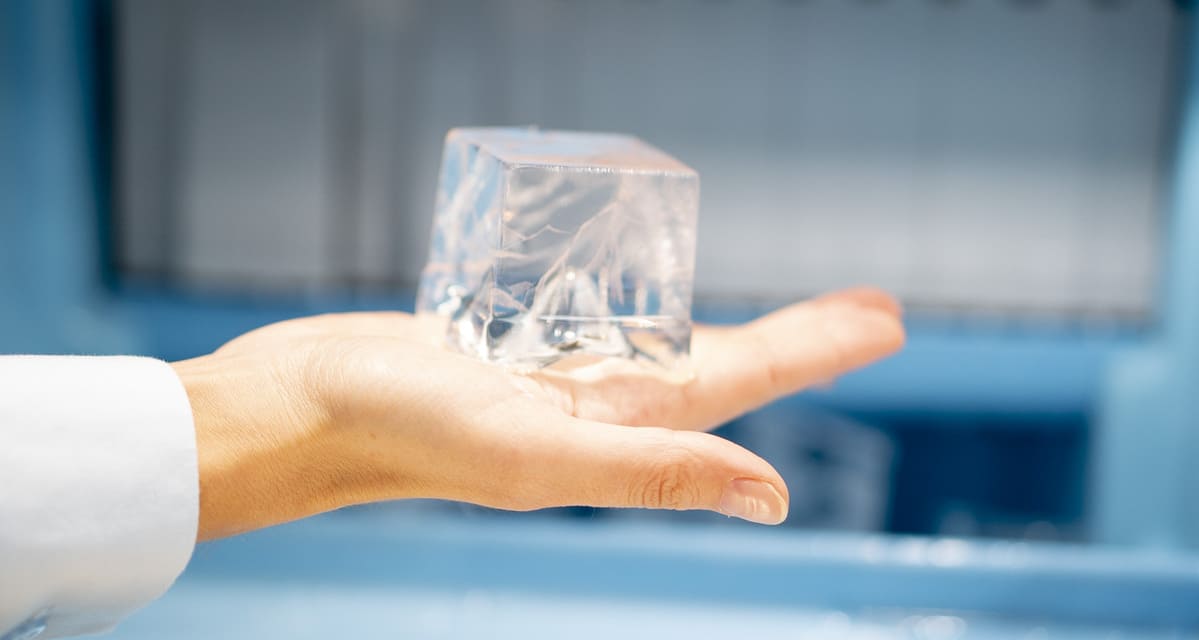
What solutions are available to improve water purity?
Improving ice quality usually involves treating the water before it enters the machine. There is no single solution; we must choose the appropriate system based on the type of water available.
Filtration
Removes suspended particles, sediment and some of the chlorine. It is the minimum requirement in any professional installation.
Water softening
Reduces the presence of minerals such as calcium, which are responsible for limescale formation. It is essential in areas with hard water.
Reverse osmosis
Achieves a much higher level of purity, removing virtually all dissolved solids. It is used when maximum clarity and quality are required, particularly in mixology.
The relationship between water purity and machine maintenance
Water quality affects not only the ice but also the performance of the equipment over time. When water contains excessive minerals, these are deposited in internal circuits, heating elements and cooling systems. This results in:
- Loss of efficiency.
- Higher energy consumption.
- Increased breakdowns.
- A reduction in the equipment’s service life.
Conversely, using treated water stabilises the machine’s operation and reduces the need for technical interventions.
Frequently asked questions about water purity and ice
When working with ice machines on a daily basis, these are the queries that typically arise in real-world operations:
Why are my ice cubes white rather than transparent?
This is usually due to the presence of minerals or air in the water. The higher the mineral content, the more difficult it is for the ice to form uniformly, which results in that whitish appearance.
Can ice change the taste of a drink?
Yes. If the water contains chlorine or other compounds, the ice releases them as it melts. This is particularly noticeable in soft drinks or high-quality beverages.
Why does my machine build up limescale even though it works fine?
Because the water contains minerals that gradually build up inside the machine. The machine continues to produce ice, but with decreasing efficiency.
How often should I change the water filters?
It depends on usage and water quality, but in professional settings it is usually necessary to check them every few months. If left too long, they cease to function properly.
Is it necessary to install a filtration system if the water is drinkable?
Yes. Just because the water is drinkable does not mean it is suitable for producing high-quality ice or for protecting the machinery in the long term.
The purity of the water and the quality of the ice determine not only the appearance and taste of the final product, but also the efficiency and durability of the machinery.
Monitoring mineral levels, removing impurities and using appropriate filtration systems results in clearer, stronger and more stable ice, whilst reducing maintenance costs and energy consumption.
If you are considering purchasing a high-quality ice machine for your business, you can contact us here.